May 20, 2015
1. Graz, called Gratz, is the second largest city in Austria after Vienna and the capital of the federal state of Styria. This is a photo of the Rathaus--city hall.
Graz has six universities with more than 44,000 students. We saw a lot of young people.
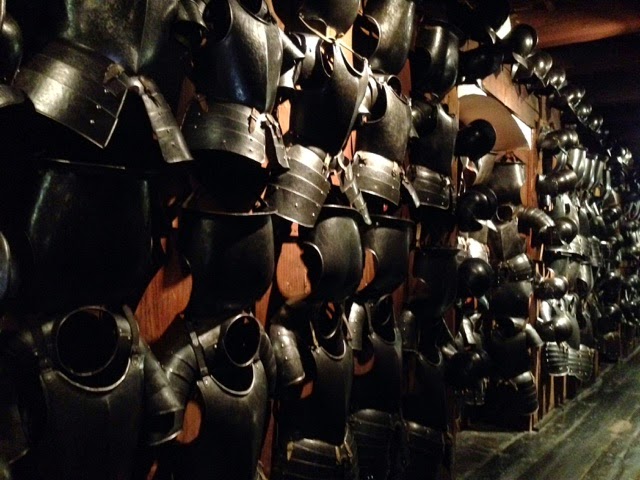
2. The Styrian Armory in the city of Graz, is the world's largest historic armory. It holds approximately 32,000 pieces of weaponry, tools, suits of armour for battle.
Between the 15th century and the 18th century, Styria was on the front line of continuous conflict with the Ottoman Empire. In order to defend itself it needed troops and equipment. It was built in 1642 and all that stuff came in handy for about 300 years.
Anyone need a helmet? Sorry, not available. All 32,000 pieces are carefully preserved for tourists and visiting groups of students.
3. We rode a tram up the hill to the old clock tower to see the views.
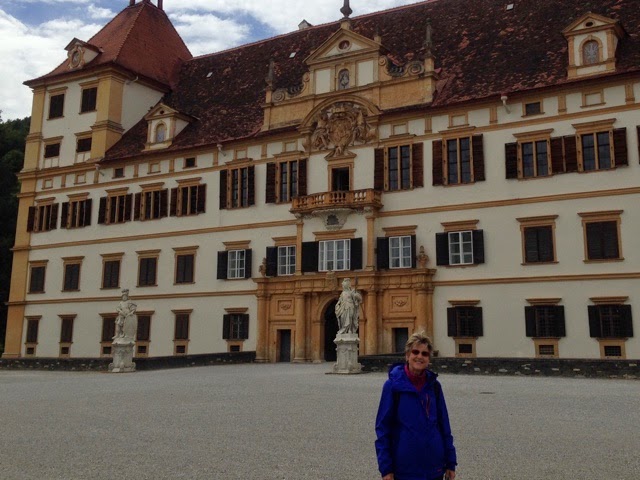
4. We went to see the Eggenberger palace. It had a wonderful ballroom and lots of art to see.
5. Outside the peacocks were struttin' their stuff.
Monday, May 25, 2015
Tuesday, May 19, 2015
Vienna II
May 16, 2015
1. We went out to see the final resting place of our favorite composers.
To try to persuade the Viennese that their future dearly-departed would rest better in the new, 1784, Zentralfrieshof (Central Cemetery), the coffins of famous composers were shipped there where they now rest together including Beethoven, Brahms, Schubert, and a lot of famous Strauss musicians.
2. Heather danced at Mozart's memorial; but wait! He is not buried there. He was placed in another cemetery, an unmarked pauper's grave in the St. Marx cemetery - a not so well-tended cemetery.
3. We found more Mozart fans here, searching out this remote location and silently paying their respects.
4. Back in the Kunsthistoriches we enjoyed more paintings. Here is one by my favorite artist, Caravaggio.
5. We brought from home a book with highlights of the Kunsthistorisches Museum's collection, and this painting, Infante Margarita Teresa in a pink dress, c.1653 by Diego Velasquez, is on the cover. It felt like success on at treasure hunt.
6. Do we have time for another palace?
The answer is "of course"!
One of Gustav Klimt's best-known and most intriguing works, The Kiss, is displayed here at the Belvedere.
Maria Theresa thought this palace too fancy and so she bought it from Prince Eugene to eliminate the competition.
7. Here is a view of the garden from the Belvedere Palace window.
8. On the way home we came across another Mozart monument.
A European singing contest has brought contestants to Vienna for a sing-off.
In a carriage the pretty Spanish singer arrived at the monument and greeted her enthralled fans who did a welcome dance in her honor.
9. Our camp in Klausterneuberg
is near the bike path that runs along side the beautiful blue Danube (Donau) River.
10. This is an action photo riding bikes.
11. Good- by to the tent campground!
12. Heather treated us to a performance of the world-famous Vienna Boys Choir.
The choir was begun in 1498 by Maximilian I and at one time numbered Haydn and Schubert in its ranks.
It was a wonderful concert. Thank you, Heather!
( thanks again to Heather for these additional photos.)
13. At the Klosterneuberg Campground.
14. Ice cream with pumpkin seed sauce. Unforgettable.
15. Shopping.
16. All this is mine!
1. We went out to see the final resting place of our favorite composers.
To try to persuade the Viennese that their future dearly-departed would rest better in the new, 1784, Zentralfrieshof (Central Cemetery), the coffins of famous composers were shipped there where they now rest together including Beethoven, Brahms, Schubert, and a lot of famous Strauss musicians.
2. Heather danced at Mozart's memorial; but wait! He is not buried there. He was placed in another cemetery, an unmarked pauper's grave in the St. Marx cemetery - a not so well-tended cemetery.
3. We found more Mozart fans here, searching out this remote location and silently paying their respects.
4. Back in the Kunsthistoriches we enjoyed more paintings. Here is one by my favorite artist, Caravaggio.
5. We brought from home a book with highlights of the Kunsthistorisches Museum's collection, and this painting, Infante Margarita Teresa in a pink dress, c.1653 by Diego Velasquez, is on the cover. It felt like success on at treasure hunt.
6. Do we have time for another palace?
The answer is "of course"!
One of Gustav Klimt's best-known and most intriguing works, The Kiss, is displayed here at the Belvedere.
Maria Theresa thought this palace too fancy and so she bought it from Prince Eugene to eliminate the competition.
7. Here is a view of the garden from the Belvedere Palace window.
8. On the way home we came across another Mozart monument.
A European singing contest has brought contestants to Vienna for a sing-off.
In a carriage the pretty Spanish singer arrived at the monument and greeted her enthralled fans who did a welcome dance in her honor.
9. Our camp in Klausterneuberg
is near the bike path that runs along side the beautiful blue Danube (Donau) River.
10. This is an action photo riding bikes.
11. Good- by to the tent campground!
12. Heather treated us to a performance of the world-famous Vienna Boys Choir.
The choir was begun in 1498 by Maximilian I and at one time numbered Haydn and Schubert in its ranks.
It was a wonderful concert. Thank you, Heather!
( thanks again to Heather for these additional photos.)
13. At the Klosterneuberg Campground.
14. Ice cream with pumpkin seed sauce. Unforgettable.
15. Shopping.
16. All this is mine!
Vienna I
May 14, 2015
Vienna I
1. The most important religious building in Vienna, St. Stephen's Cathedral has borne witness to many important events in Habsburg and Austrian history and has, with its multi-coloured tile roof, become one of the city's most recognizable symbols.
St. Stephen's can be seen from nearly everywhere around the city, very convenient for a visitor like me.
Composer Beethoven discovered the totality of his deafness when he saw birds flying out of the bell tower as a result of the 23 bells' tolling but could not hear them.
2. Heather took me on a giant Ferris wheel ride in Prater Park. That was fun.
3. Finally we arrived at the Vienna Kunsthistoriches Art Museum to see many of our favorite paintings. We planned coming here for a long time.
We only made it through the Flemish and Netherlands section that day, so we decided to return again later.
4. There is lovely Heather in the lovely lobby.
5. This glorious stairway with Klimt paintings above is a crowd-pleaser.
6. Is this painting large enough?
7. Discussing the finer points of Rubens.
8. The sumptuous Schloss Schonbrunn is a popular summer palace now filled with throngs of international tourists.
It had 2000 rooms, though we only saw 40 of them which was plenty. The palace features frescoes ceilings, tapestries, crystal chandeliers and endless gilded ornaments.
Mozart, aged six, played his first royal concert in 1762 in the presence of Empress Maria Theresa and we stood in that very room.
The Round Chinese Room had a table that could be drawn up and down through the floor for serving food so that servants need not enter during secret consultations.
9. We had to be at the gate by 10:30 am with our timed ticket or be refused entrance. That was stressful.
10. The Gloriette monument has the best view of Vienna. We walked up the hill to survey some of the former Hapsburg Empire.
11. We believe these are fake Roman ruins similar to those at Sanssouci in Germany. It was the fashion to have this in your royal backyard.
12. More of the walking paths on the huge Schoenbrunn Palace grounds.
13. St. Stephen's from above.
There's more . . .
Vienna I
1. The most important religious building in Vienna, St. Stephen's Cathedral has borne witness to many important events in Habsburg and Austrian history and has, with its multi-coloured tile roof, become one of the city's most recognizable symbols.
St. Stephen's can be seen from nearly everywhere around the city, very convenient for a visitor like me.
Composer Beethoven discovered the totality of his deafness when he saw birds flying out of the bell tower as a result of the 23 bells' tolling but could not hear them.
2. Heather took me on a giant Ferris wheel ride in Prater Park. That was fun.
3. Finally we arrived at the Vienna Kunsthistoriches Art Museum to see many of our favorite paintings. We planned coming here for a long time.
We only made it through the Flemish and Netherlands section that day, so we decided to return again later.
4. There is lovely Heather in the lovely lobby.
5. This glorious stairway with Klimt paintings above is a crowd-pleaser.
6. Is this painting large enough?
7. Discussing the finer points of Rubens.
8. The sumptuous Schloss Schonbrunn is a popular summer palace now filled with throngs of international tourists.
It had 2000 rooms, though we only saw 40 of them which was plenty. The palace features frescoes ceilings, tapestries, crystal chandeliers and endless gilded ornaments.
Mozart, aged six, played his first royal concert in 1762 in the presence of Empress Maria Theresa and we stood in that very room.
The Round Chinese Room had a table that could be drawn up and down through the floor for serving food so that servants need not enter during secret consultations.
9. We had to be at the gate by 10:30 am with our timed ticket or be refused entrance. That was stressful.
10. The Gloriette monument has the best view of Vienna. We walked up the hill to survey some of the former Hapsburg Empire.
11. We believe these are fake Roman ruins similar to those at Sanssouci in Germany. It was the fashion to have this in your royal backyard.
12. More of the walking paths on the huge Schoenbrunn Palace grounds.
13. St. Stephen's from above.
There's more . . .
Wednesday, May 13, 2015
Czech Republic to Austria
May 12, 2015
1. Hoping to be discovered , I struck this pose. No calls yet, however.
A UNESCO World Heritage Site, Český Krumlov is famous for its Old Town and its castle complex. This small, picturesque town is surrounded by rolling hills and the Vltava River in the southwest part of the Czech Republic.
2. The three-storied covered arched bridge stands on massive stone pillars and connects portions of the castle grounds. It was once a drawbridge with a gate.
3. These tulips catch the eye.
4. We had to change from using Euro money to Czech money for awhile.
Czech coins are fairly heavy and quite beautiful. The official currency of the Czech Republic is the Czech crown (koruna), abbreviated as Kč, with the international abbreviation CZK. The approximate value of 100 CZK is
5 USA dollars.
5. The River provided protection by nearly surrounding the castle.
6. Only two motor homes were in this rural campground by a stream. We rode bicycles on a newly paved country road into town then we walked up a steep hill to enter the castle.
7. A little further down the road we stopped to see Melk Abbey (Stift Melk), a Benedictine abbey above the town of Melk, Austria, on a rocky outcrop overlooking the Danube river.
8. Inside was a grand old library and historical objects. But the beautiful baroque church was the high point.
9. Later we met up with Rich's friends for a birthday celebration at an Austrian ice cream shop.
10. Whoops, this picture is out of order.
The Baroque theatre at Cesky Krumlov was beautiful and interesting. We went behind the scenes to see how everything worked. There are a lot of ropes and trap doors; being a stagehand had to be quite a workout.
1. Hoping to be discovered , I struck this pose. No calls yet, however.
A UNESCO World Heritage Site, Český Krumlov is famous for its Old Town and its castle complex. This small, picturesque town is surrounded by rolling hills and the Vltava River in the southwest part of the Czech Republic.
2. The three-storied covered arched bridge stands on massive stone pillars and connects portions of the castle grounds. It was once a drawbridge with a gate.
3. These tulips catch the eye.
4. We had to change from using Euro money to Czech money for awhile.
Czech coins are fairly heavy and quite beautiful. The official currency of the Czech Republic is the Czech crown (koruna), abbreviated as Kč, with the international abbreviation CZK. The approximate value of 100 CZK is
5 USA dollars.
5. The River provided protection by nearly surrounding the castle.
6. Only two motor homes were in this rural campground by a stream. We rode bicycles on a newly paved country road into town then we walked up a steep hill to enter the castle.
7. A little further down the road we stopped to see Melk Abbey (Stift Melk), a Benedictine abbey above the town of Melk, Austria, on a rocky outcrop overlooking the Danube river.
8. Inside was a grand old library and historical objects. But the beautiful baroque church was the high point.
9. Later we met up with Rich's friends for a birthday celebration at an Austrian ice cream shop.
10. Whoops, this picture is out of order.
The Baroque theatre at Cesky Krumlov was beautiful and interesting. We went behind the scenes to see how everything worked. There are a lot of ropes and trap doors; being a stagehand had to be quite a workout.
Subscribe to:
Posts (Atom)